
A yellow and white Volkswagen ID. Buzz with its side door open, parked in a rural field filled with large hay bales under a cloudy sky.

Explore the EV Hub

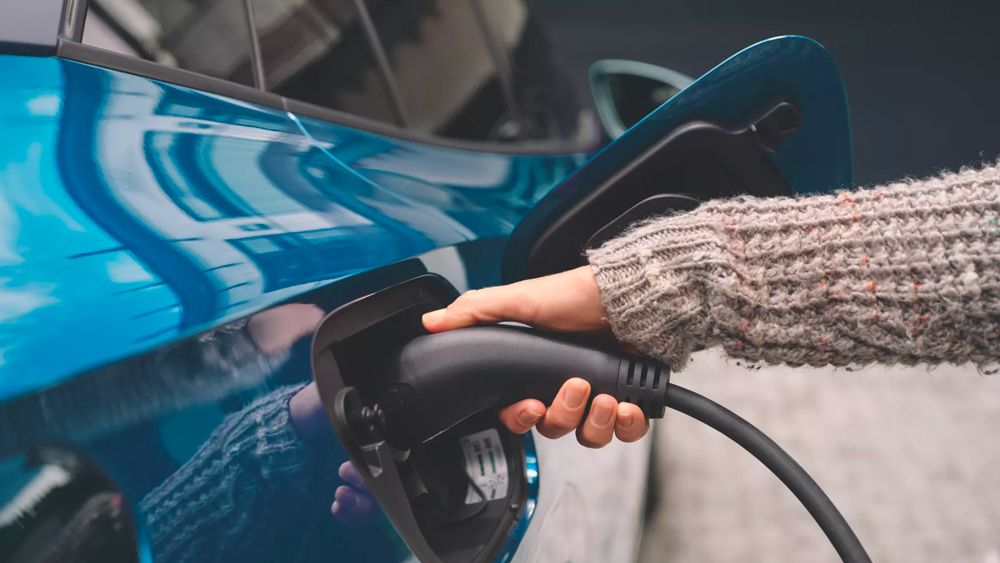
Close-up of a person's hand plugging a black charging cable into the side port of a teal electric car.

Ready, set, charge

You can schedule a departure time that helps your Volkswagen EV determine when charging should be completed by. If it's a daily time, like when you start your commute to work, you only need to do this once. Just set it then forget it.

An open orange leather zippered wallet filled with Euro banknotes against a bright blue background.

More go, less costs

EVs have less moving parts under the hood than gas cars, which means less service appointments, easier maintenance and less annoying costs. You can forget about pesky oil changes too, since EVs don't need oil to begin with.

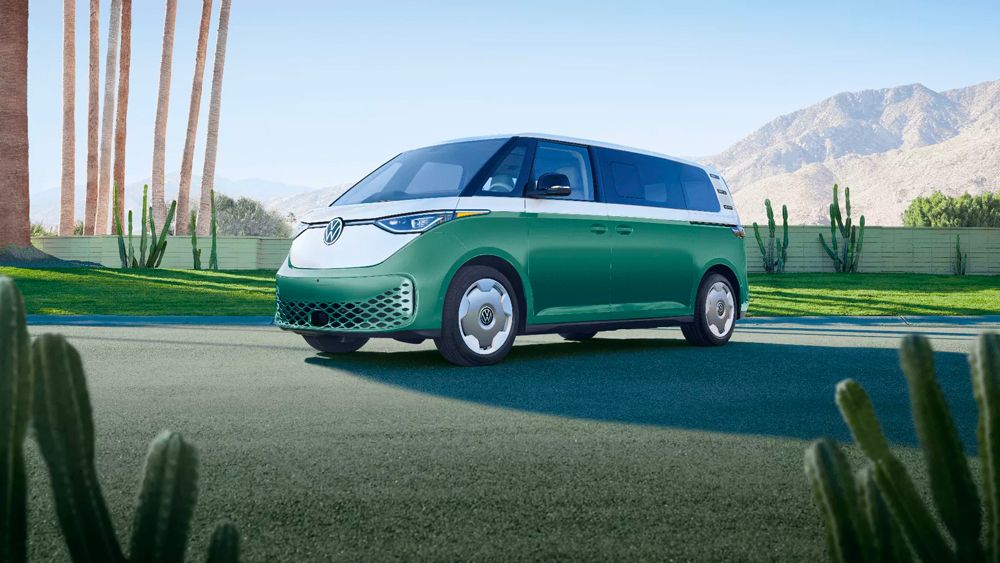
A two-tone green and white Volkswagen ID. Buzz parked on an asphalt road in a desert landscape with palm trees and mountains.

Go the distance

Our latest generation of Volkswagen EVs can go up to 468 km* on a full charge. Plus, with Canada's rapidly growing charger network, it's easy to keep going.

*The range of the 2024 Volkswagen ID.4 Pro on a full charge.

Stay in charge

Like the one in your phone, a high-voltage EV battery ages over time. So, we included an onboard system (Battery Management System) that automatically helps protect your Volkswagen EV battery. Here’s a few more battery-protecting tips: 

  • It may sound odd, but it’s ok to not fully charge your battery. Rule of thumb: keep it under 80% to hop across town and charge it over 80% for road trips.
  • Try to keep your battery charged between 20% and 90% over long periods of time. A happy medium makes a happy battery.


DC fast charging is convenient, but not always needed. Back-to-back road trip DC fast charges are fine, but everyday DC fast charges around town, not so much.

Charging Your EV

Charging 101

Charging your EV is as easy as plug and play―but here are a few more tips to help you get the most out of your charging.

  • You can use the "scheduled charging" function to set up your vehicle to automatically charge at certain times of the day. This is especially handy for setting up overnight charging during off-peak electricity hours.
  • Once you've programmed "scheduled charging", you can conveniently set it and forget it, knowing that your vehicle will always be charged in the morning.
  • Aim for charging up to 80% instead of 100% full. With the lithium-ion batteries in EVs, charging to 80% helps to maintain your battery's max capacity more than a full charge.
  • Start recharging your EV when it hits 30% instead of 0%. Letting your EV battery fall completely to 0% before recharging will eventually reduce your EV's overall battery life.
  • While great for recharging quickly on long journeys, DC fast chargers are not recommended for daily use. Like a laptop or cellphone, battery capacity can slowly deteriorate over time with each charge, and DC fast chargers can increase the speed of deterioration if overused. For regular charging, we recommend Level 2 chargers.

Home Charging

There's no place like home, especially when it comes to charging your EV. The time it takes to fully charge your vehicle at home can differ depending on your setup, so it's good to know the options.

Level 1 Home Charging
Level 1 charging is simply done via the cable provided with your vehicle and a regular 120v outlet - no different than charging your phone, really.

Level 2 Home Charging
Many Canadians purchase a Level 2 240v home charging station for their garage. It requires a 240v outlet, similar to one used for a washer or dryer, and VW dealerships can connect you with local electricians for quick and easy home installation.

Purchasing Level 2 Chargers
The Volkswagen 2-in-1 Charging Cable can be purchased through your Volkswagen dealer. For those in apartments or condos, many modern buildings have Level 2 chargers installed so it's worth inquiring about the situation in yours.

Charging on the Go

While charging at home is a convenience exclusive to EVs, anyone who's ever driven is used to having to give their vehicle some juice while on the road. That's where public charging stations equipped with Level 2 and/or DC fast chargers come into play.

Level 2 Public Charging
Most public charging stations are equipped with Level 2 charging―the same technology as your Level 2 charger at home. These are also known as "destination chargers" and can be found at malls, restaurants or near local businesses so you can charge your vehicle while going about your day.

DC Fast Chargers
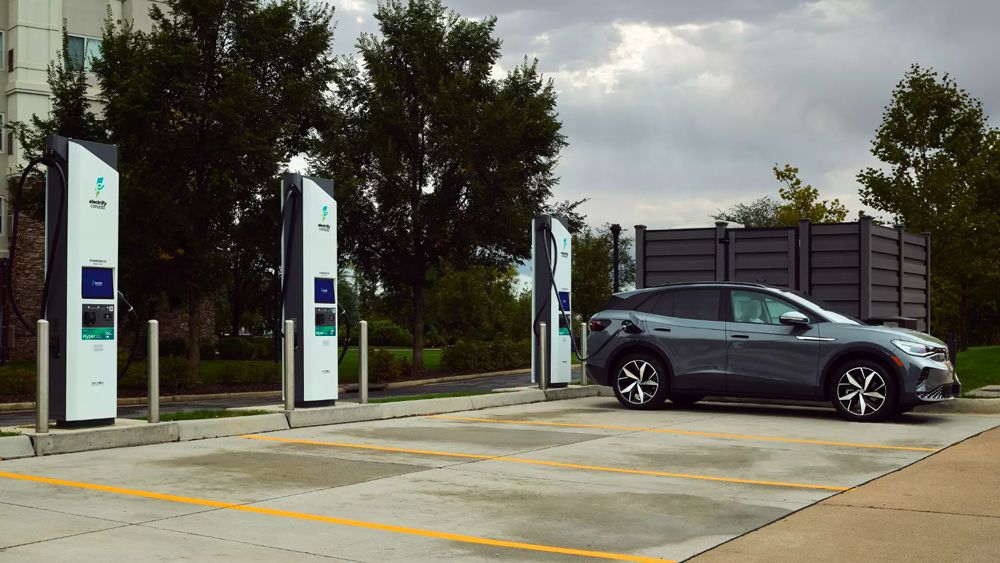
These are ideal for when you need to recharge quickly in the middle of a longer trip and you can think of them like an electric gas station, often found at public service stations near highways.

Finding Public Chargers
You can use the navigation system in your ID.4 or the Electrify Canada app to find your nearest DC fast charger or public Level 2 charger, and even check the availability for charging at stations close by.

Meet the ID. Family

Good to know when you go EV

How far can an EV go on a full charge?

Myth: Humans only use 10% of their brain.

Reality: Volkswagen EVs go further than you may think on a 100% charge.

In fact, our latest generation of EVs can go up to 468 km on one charge*. Still, the saying “mileage may vary” rings true, so think of your load, driving conditions, and weather forecast before you hit the road.

*Combined range estimate based on Natural Resources Canada (NRCan) approved guidelines and testing methods. Please refer to NRCan’s Fuel Consumption Guide available at https://fcr-ccc.nrcan-rncan.gc.ca/en for more information. Full charge required. Actual driving range will vary based on driving and charging habits, weather and temperature, terrain, use of HVAC and accessories, battery age and vehicle condition. Battery capacity decreases with time and use. See owner’s manual for details.