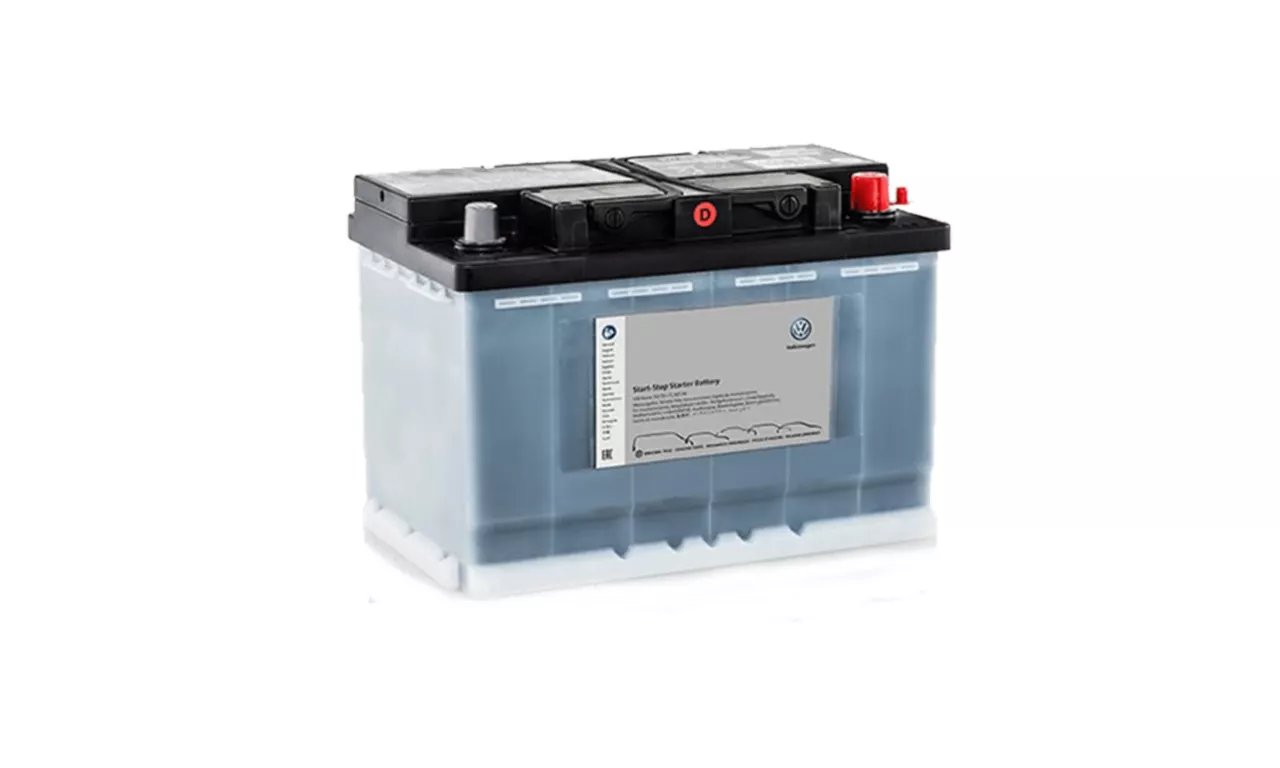
Cold weather can make a marginal 12-volt battery harder to rely on. If your Volkswagen is slow to start, repeatedly needs a boost or displays a battery-related warning, arrange a check of the battery and relevant electrical systems. Replacing a battery without finding the cause can leave the original problem unresolved.
Know which battery you are discussing
In a gasoline Volkswagen, the 12-volt battery supplies starting power and supports electrical equipment. In an electric Volkswagen, the high-voltage traction battery and the low-voltage system have different jobs. A charge level shown for driving range does not, by itself, diagnose the condition of the 12-volt battery.
When speaking with a service advisor, describe the exact warning instead of simply saying “the battery is low.” Include whether the vehicle will start or become ready to drive, whether the issue happened after parking and whether a remote app command failed. An app connection problem alone does not prove battery failure.
Why short trips can matter in winter
Starting, heating, lighting and other electrical demands add up. Frequent short journeys may not give the charging system enough time to recover the energy used, particularly when the vehicle also sits parked for extended periods. Battery age, condition, connection problems and unintended electrical draw can affect the result too.
If your driving has changed to occasional errands, tell the advisor. Ask whether a compatible maintainer is appropriate for the vehicle and where it should connect. Use only equipment and procedures permitted by the owner’s manual; do not improvise connections or work on high-voltage components.

Warning signs worth recording
- Slower-than-usual cranking on a gasoline model.
- A repeated no-start or repeated need for roadside boosting.
- A battery, charging-system or other electrical warning.
- Electrical symptoms that appear after the vehicle has been parked.
- Recent accessory installation or a change in driving and parking habits.
Write down the conditions and take a photo of the dashboard message when safely parked. These details can help distinguish a worn battery from a charging fault, connection issue or another concern. Follow any instruction to stop or seek assistance.
What a useful battery check should establish
Ask the technician to assess battery condition, state of charge and the vehicle’s charging system as appropriate. A low reading may reflect discharge rather than permanent failure; the service team can decide whether charging, further testing or replacement is needed.
If replacement is recommended, confirm the correct battery technology, capacity, fitment and any model-specific installation or adaptation procedure. The right choice depends on the vehicle, not simply on finding a battery that fits in the tray. Request a written explanation of the result and the work proposed.

If the vehicle will not start
Move to a safe place if possible, follow the owner’s manual and contact roadside assistance or a service professional. Do not repeatedly attempt a procedure you are unsure of. A damaged, leaking or potentially frozen battery requires professional attention; do not try to charge or boost it.
After a successful boost, arrange diagnosis if the cause is unclear or the problem returns. A boost may restore operation temporarily without resolving the reason the battery lost charge. Confirm that the vehicle is safe to drive before continuing.
Build battery care into seasonal planning
Battery testing can be discussed alongside tire, wiper, lighting and brake concerns. Bring service records and explain any recent battery replacement or electrical work. The Volkswagen service department can recommend the next step for your specific vehicle.
For electric owners, Volkswagen’s winter EV guidance also explains compatible energy-management functions and cold-weather range considerations. Availability and settings vary. Follow the instructions for your model and software version.
Request a Volkswagen battery assessment in Edmonton before an intermittent concern becomes a more disruptive winter breakdown.
Frequently Asked Questions
Does a no-start always mean I need a new battery?
No. Discharge, charging-system faults, connections or other concerns can produce similar symptoms. Diagnosis helps establish the cause before replacement.
Does an electric Volkswagen have a 12-volt battery?
Yes. Electric Volkswagens use a low-voltage system in addition to the high-voltage traction battery. The two systems have different roles and should not be diagnosed from the range display alone.
Can I use any replacement battery that fits?
No. The correct specification, technology and installation procedure depend on the vehicle. Have the battery and any required adaptation confirmed for the exact model.
Your Next Step at West Edmonton Volkswagen
Talk with the team about the vehicle or service that fits your Edmonton driving routine.